
High CBD ≠ high THC
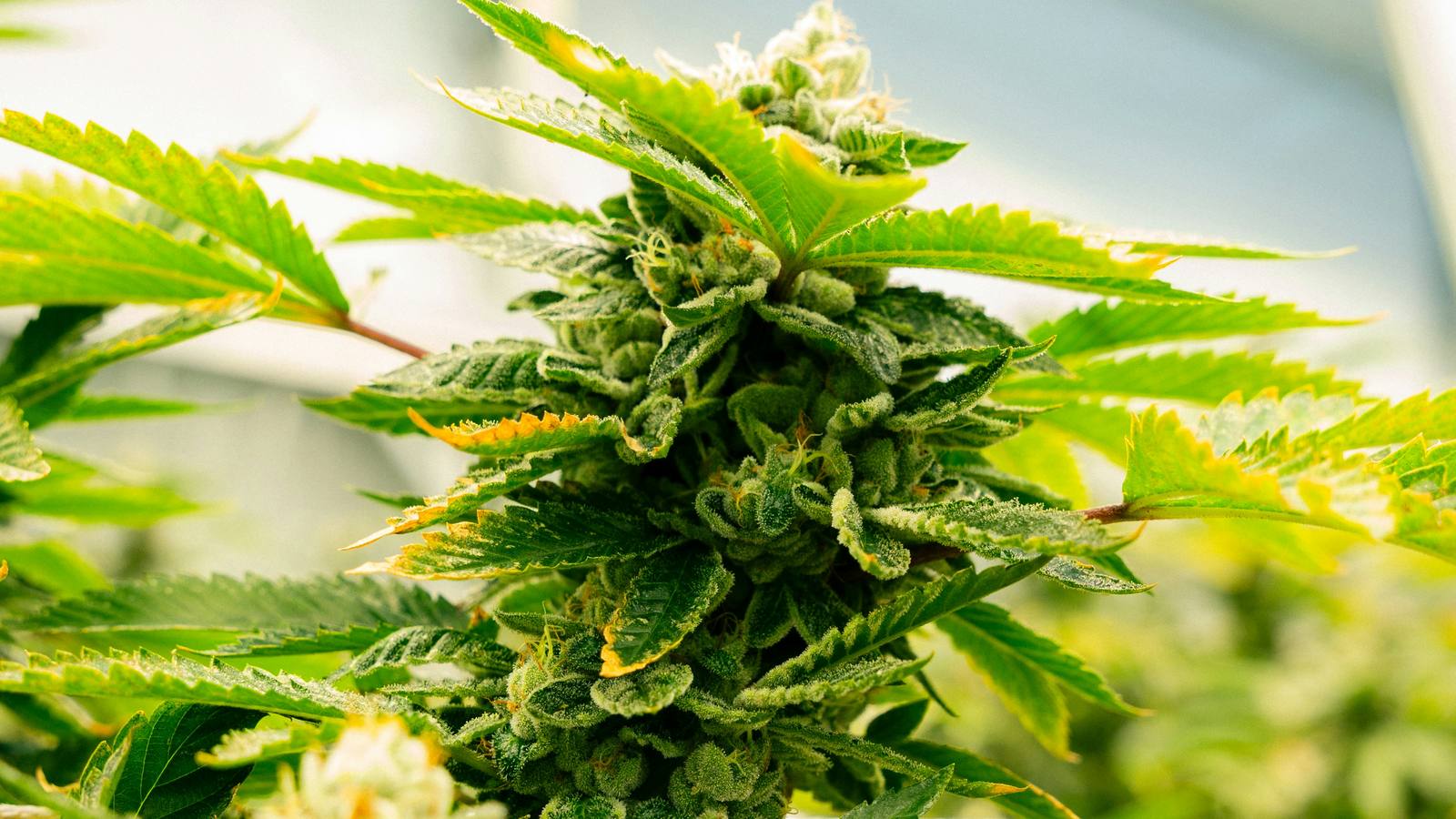
A claim that comes up regularly is that high CBD plants are likely to exceed 1% THC, and that growing for CBD automatically creates a compliance risk. While that is true for some types of cannabis, the difference is not how much CBD the plant produces but the genetics behind it.
Cannabis is grouped into chemotypes based on the cannabinoids a plant is genetically programmed to produce. The plant begins with a common precursor called cannabigerolic acid (CBGA), which is then converted into either tetrahydrocannabinolic acid (THCA) or cannabidiolic acid (CBDA), and which pathway dominates depends on the enzymes the plant carries.
This is controlled at a single point in the genome, known as the B locus, where the gene occurs in two versions, one producing THCA synthase and one producing CBDA synthase. Every plant inherits one copy from each parent, and that combination determines its chemotype.
A plant carrying two THCA synthase copies produces mostly THCA and is known as Type I. A plant carrying two CBDA synthase copies produces mostly CBDA and is Type III. A plant carrying one of each produces both cannabinoids and is Type II. This distinction is where much of the confusion around CBD hemp comes from.
Type II plants produce both THC and CBD in significant amounts, so increasing CBD production also increases THC. No growing technique can change that relationship, because it is built into the plant's genetics.
Type III plants behave differently. Purpose bred CBD hemp is generally Type III, genetically biased towards producing CBDA, with THC appearing only as a minor component. That is why a high CBD percentage does not automatically mean high THC.
A Type III plant produces CBD and THC at a ratio of around 20:1 or 30:1 depending on the genetics, and the arithmetic follows from there. A plant producing 15% CBD at a 25:1 ratio would be expected to produce around 0.6% THC, and the same plant producing 10% CBD would be around 0.4%.
A stronger crop produces more cannabinoids overall, but the relationship between CBD and THC stays roughly the same, so the plant does not suddenly start producing more THC because it had a better season. This is why the CBD percentage alone is not the number to focus on, and why the ratio tells you far more.
In NZ, hemp is defined as cannabis containing no more than 1% THC by dry weight, which gives growers considerably more room than the 0.3% limit used in some other countries.
A stable Type III cultivar with a known CBD to THC ratio can reach useful CBD levels while remaining comfortably within the definition of hemp. The important part is choosing genetics that have been properly tested, because a cultivar with a record behind it is predictable in a way that an untested one is not.
A certificate of analysis (CoA) tells you what was present in one sample, from one crop, at one point in time. That result is valuable, because it confirms what the plant produced and gives an indication of the cultivar's performance, but it does not guarantee that every future crop will produce the same numbers.
Cannabinoid levels move with growing conditions, and light, nutrition, water availability, stress, and harvest timing can all influence the final percentages. What usually remains stable is the relationship between the cannabinoids. A cultivar that produces 14% CBD one season and 11% the next has not changed into a different plant, and its THC will generally move with the CBD rather than behaving independently.
The most useful questions to ask about a cultivar are not about the biggest CBD number on a sales sheet, but about the ratio behind it, how many seasons it has been tested across, whether those crops were grown to full maturity or cut early, and what the highest THC result on record is, since that is the figure that shows how much room the cultivar has under the legal limit. A cultivar with a consistent ratio and a track record across different seasons is a known quantity, and everything else is a prediction.
Grow Hemp cultivars are bred and grown in the Far North, with CoAs spanning four seasons.